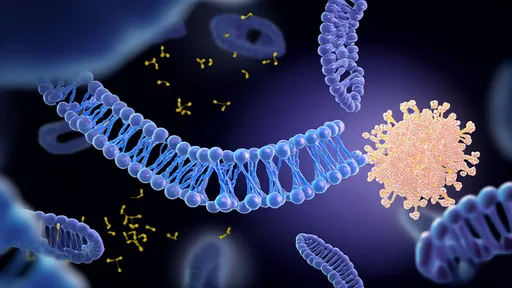
The global scientific community stands at a crossroads with the rapid advancement of gene-editing technologies. CRISPR-Cas9, once a revolutionary tool confined to laboratory experiments, now promises to reshape medicine, agriculture, and even ecosystems. Yet, beneath this dazzling potential lies a tangled web of ethical dilemmas and regulatory gaps that could determine whether humanity harnesses or is haunted by this power.
In 2018, the world recoiled when Chinese scientist He Jiankui announced the birth of the first gene-edited babies. This reckless experiment exposed the fragility of international oversight, sparking urgent debates about where to draw the "safety red line." Since then, nations have scrambled to construct regulatory frameworks, but the patchwork of conflicting policies threatens to create dangerous loopholes. The European Union's precautionary approach clashes with America's product-based regulation, while some countries lack any meaningful oversight at all.
The therapeutic promise of gene editing dazzles clinicians worldwide. Trials targeting sickle cell anemia and beta thalassemia show extraordinary results, offering cures where only palliative care existed. Yet these medical marvels risk becoming luxury treatments for wealthy nations while remaining inaccessible in developing countries. Worse still, underground "biohacker" communities already trade CRISPR kits online, enabling amateur experiments that could unleash unpredictable consequences.
Agricultural applications present equally complex challenges. Drought-resistant crops engineered through gene editing might combat climate-induced famines, but multinational corporations could use patent laws to control global food supplies. The case of "gene drives" - technologies designed to propagate genetic changes through entire wild populations - raises apocalyptic scenarios. A single field trial gone wrong might irreversibly alter ecosystems, yet no international body possesses authority to prevent such experiments.
China's 2023 regulations imposing strict penalties for unauthorized human gene editing demonstrate one approach to enforcement. However, the very scientists who developed CRISPR technology warn that regulations must evolve faster than the science itself. Jennifer Doudna, Nobel laureate and CRISPR pioneer, recently testified before Congress that current oversight mechanisms resemble "trying to contain a hurricane with mosquito netting." Her alarm reflects the terrifying pace at which gene-editing tools are becoming cheaper, simpler, and more powerful.
The shadow of eugenics looms over discussions about permissible uses. While editing genes to eliminate debilitating hereditary diseases garners widespread support, the line between therapy and enhancement blurs dangerously. Wealthy parents might soon demand "designer babies" with enhanced intelligence or athleticism, potentially creating genetic castes. Some philosophers argue we've already crossed an ethical Rubicon by beginning to direct human evolution.
International cooperation remains frustratingly elusive. Unlike nuclear technology, gene-editing tools require minimal infrastructure and can be developed in modest laboratories. The Biological Weapons Convention lacks mechanisms to address civilian CRISPR applications, while scientific journals struggle to establish consistent publication ethics for gene-editing research. A 2022 incident where Russian scientists allegedly attempted to resurrect extinct viruses using gene editing revealed how easily research can slip into dangerous territory.
As the science races ahead, society struggles to keep pace. Public understanding lags far behind technological reality, with most people unaware that gene-edited products already appear in supermarkets. Religious groups, indigenous communities, and environmental activists demand voices in decisions that could alter life itself. The coming decade may witness either a golden age of genetic medicine or a catastrophic erosion of biological boundaries - the difference lies in whether humanity can collectively grasp the "safety red rope" before it's too late.
What emerges clearly is that traditional regulatory approaches cannot contain this challenge. Dynamic, interdisciplinary governance structures must emerge that include scientists, ethicists, policymakers, and crucially, diverse public representation. The alternative - a fragmented world where gene-editing standards vary by nationality and wealth - risks creating dangers we can scarcely imagine. As one virologist grimly noted at a recent WHO meeting: "Nature keeps her secrets in a language of DNA we're only beginning to read, and we're already trying to rewrite the book."
By /Aug 7, 2025

By /Aug 7, 2025
By /Aug 7, 2025

By /Aug 7, 2025
By /Aug 7, 2025

By /Aug 7, 2025
By /Aug 7, 2025

By /Aug 7, 2025
By /Aug 7, 2025
By /Aug 7, 2025
By /Aug 7, 2025

By /Aug 7, 2025

By /Aug 7, 2025

By /Aug 7, 2025

By /Aug 7, 2025
By /Aug 7, 2025
By /Aug 7, 2025

By /Aug 7, 2025

By /Aug 7, 2025

By /Aug 7, 2025
