In a groundbreaking effort to safeguard the future of coral reefs, scientists have launched an ambitious "Coral Gene Bank" initiative focused on cryogenically preserving coral larvae. This cutting-edge conservation strategy aims to combat the escalating threats of climate change, ocean acidification, and human activity that have pushed many coral species toward extinction. By storing coral genetic material at ultra-low temperatures, researchers hope to create a biological insurance policy for reef ecosystems worldwide.
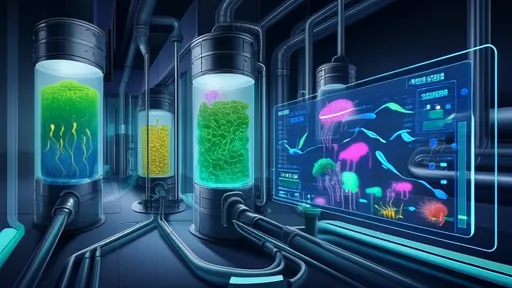
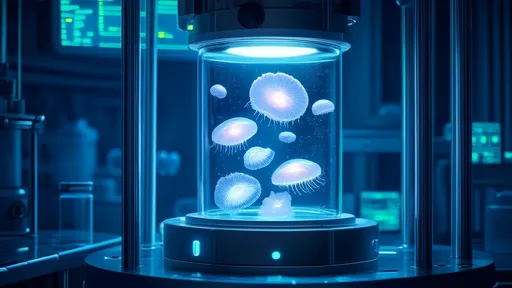
The concept draws inspiration from seed vaults like the Svalbard Global Seed Vault but adapts the principle for marine organisms. Coral larvae are collected during brief spawning events—often just days per year—and immediately processed using specialized cryopreservation techniques. The delicate biological material is then stored in liquid nitrogen at temperatures below -196°C, effectively pausing all metabolic activity while maintaining cellular integrity.
Why focus on larvae rather than adult coral polyps? Marine biologists explain that coral larvae represent the most genetically flexible life stage, containing the blueprint for future adaptations. "Larvae hold the evolutionary potential of their species," notes Dr. Elena Marcos, lead cryobiologist at the Hawaii Coral Initiative. "By preserving this stage, we're not just saving coral—we're preserving their capacity to evolve alongside changing ocean conditions."
The technical challenges have been immense. Early attempts at coral cryopreservation in the 1980s failed spectacularly—ice crystals would shred cell membranes during freezing. Modern techniques employ cryoprotectant "cocktails" that replace cellular water with antifreeze-like compounds. The process now achieves survival rates exceeding 80% for certain coral species, a dramatic improvement from initial 5% success rates.
Revival protocols represent another frontier. Thawed larvae must be carefully reintroduced to seawater through gradual temperature changes and precisely timed nutrient introductions. The most promising results come from pairing revived larvae with "nurse" microbial communities that help them adjust. Recent trials with Acropora larvae showed 60% of thawed specimens successfully settled onto artificial reef substrates and began calcifying.
Critics initially dismissed the project as science fiction, but several factors have converged to make it viable. Advances in nanotechnology allow monitoring of cellular structures during freezing. Automated vitrification systems now standardize the delicate freezing process. Perhaps most crucially, the plummeting costs of liquid nitrogen storage have made large-scale preservation economically feasible.
The project maintains living duplicates of all preserved specimens at partner aquariums worldwide—creating a "backup of the backup." These living collections serve dual purposes: they provide control groups for revival experiments and allow researchers to study coral biology year-round rather than waiting for annual spawning events.
Ethical considerations have emerged alongside technical progress. Some conservation biologists argue that focusing on high-tech solutions might divert attention from habitat protection. "No one thinks frozen zoos can replace living ecosystems," responds Dr. Marcos. "But when reefs are dying faster than we can protect them, we need every tool available—including this stopgap measure."
The Coral Gene Bank currently houses specimens from 32 coral species across seven biogeographic regions. Priority goes to reef-building species and those hosting unique symbiotic relationships. Each vial contains not just coral larvae but also their associated microbiome—preserving the complex biological partnerships essential for coral survival.
Looking ahead, researchers envision combining cryopreservation with selective breeding. Future revival efforts might incorporate larvae genetically enriched for heat tolerance or disease resistance. Such applications remain theoretical but could transform coral restoration if warming trends continue. The project has already sparked interest from other marine conservation fields, with similar efforts beginning for endangered mollusks and crustaceans.
As coral bleaching events grow more frequent, what began as an experimental last-resort effort is rapidly becoming a cornerstone of marine conservation. The Coral Gene Bank team now trains scientists from developing nations in cryopreservation techniques, creating a global network of coral guardians. Their work represents a rare beacon of hope in the increasingly dire prognosis for reef ecosystems worldwide.
The next major milestone will come in 2025, when researchers attempt large-scale reef reseeding using cryopreserved larvae. If successful, it could mark a turning point in marine conservation—proving that even the most fragile creatures can be given a second chance through human ingenuity and perseverance.
By /Aug 7, 2025

By /Aug 7, 2025
By /Aug 7, 2025

By /Aug 7, 2025
By /Aug 7, 2025

By /Aug 7, 2025
By /Aug 7, 2025
By /Aug 7, 2025
By /Aug 7, 2025
By /Aug 7, 2025
By /Aug 7, 2025
By /Aug 7, 2025

By /Aug 7, 2025
By /Aug 7, 2025

By /Aug 7, 2025
By /Aug 7, 2025
By /Aug 7, 2025
By /Aug 7, 2025
By /Aug 7, 2025
By /Aug 7, 2025
