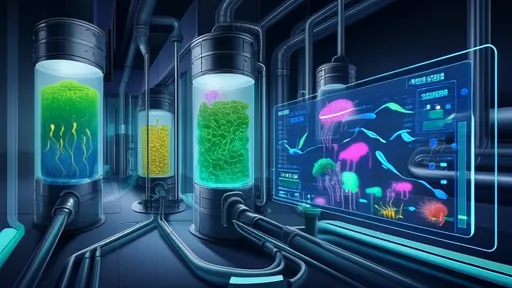
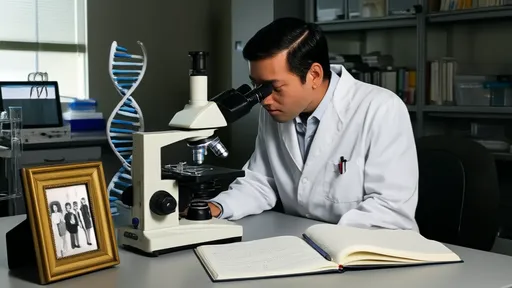
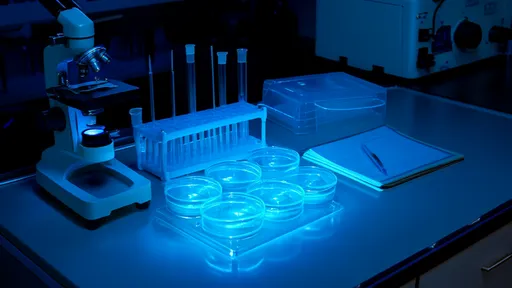
The kitchen table glowed with an eerie blue light as the amateur biologist injected himself with CRISPR components ordered from an online forum. This scene, once confined to dystopian fiction, now plays out in basements and makeshift labs worldwide as the biohacking movement blurs the line between scientific exploration and reckless experimentation. The democratization of gene editing tools has unleashed a wave of DIY genetic modification that keeps medical ethicists awake at night.
Biohackers operate in a legal gray zone where regulatory oversight evaporates the moment experimentation leaves institutional settings. Unlike clinical researchers bound by ethical review boards, these self-experimenters answer to no one but their own curiosity. The most extreme practitioners push beyond simple microbiome tweaks or vitamin optimization into dangerous territory - attempting to alter eye color, enhance muscle growth, or even engineer HIV resistance through garage-based gene therapy.
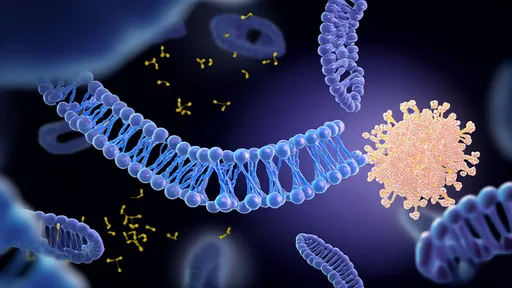
The tools have become alarmingly accessible. A complete CRISPR gene-editing kit now ships to your doorstep for under $200, complete with tutorials ripped from preprint scientific papers. Online communities dissect cutting-edge studies, often misinterpreting complex molecular biology through the lens of biohacker bravado. What gets lost in translation are the nuanced safety protocols, the validation steps, and the sobering reality that even professional scientists struggle to predict off-target effects.
Medical journals have begun documenting the collateral damage. A California man permanently disabled his muscles attempting to reverse aging through gene therapy. German biohackers accidentally gave themselves antibiotic-resistant infections while trying to eliminate lactose intolerance. The most tragic cases never make it into case reports - amateur geneticists who quietly suffer the consequences of irreversible genomic vandalism.
The psychological drivers behind extreme self-editing reveal a disturbing cocktail of transhumanist ideology and Silicon Valley-style disruption fetishism. Some view their bodies as hackable prototypes in a grand evolutionary experiment. Others chase the adrenaline rush of being "first" to achieve some genetic modification, regardless of consequences. This mindset treats human DNA as open-source code - endlessly editable, with the body as mere hardware to be reprogrammed.
Professional geneticists observe these developments with horrified fascination. The same CRISPR technology that took Nobel-winning scientists decades to develop now gets wielded by enthusiasts with weekend lab experience. Where researchers see potential minefields of unintended consequences, biohackers see uncharted territory begging for exploration. This fundamental disconnect stems from how each group calculates risk - where academia sees probability, the garage experimenter sees possibility.
Beyond physical risks, the biohacking community grapples with ethical quicksand. Underground forums buzz with discussions about enhancing children's genes or sharing experimental genetic "upgrades" outside medical channels. The lack of oversight creates perfect conditions for predatory actors - unregulated clinics offering dangerous procedures, underground labs selling untested genetic modifications, and conspiracy theorists peddling gene edits as miracle cures.
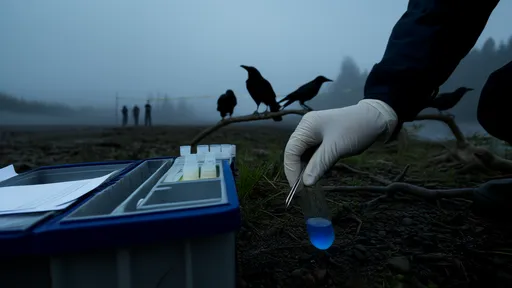
The legal system remains woefully unprepared for this new frontier. Current regulations focus on institutional research, leaving self-experimentation in a jurisdictional void. Some countries have banned certain gene-editing components, but determined biohackers easily circumvent these restrictions through cryptocurrency purchases and mail forwarding. This regulatory vacuum ensures that the next generation of biological experiments will occur in shadows rather than laboratories.
As the technology becomes more powerful and accessible, society faces uncomfortable questions. Should individuals have absolute autonomy over their own genomes? How do we balance scientific freedom with public safety when experiments can literally alter the human gene pool? The biohacking movement forces us to confront whether personal liberty extends into biological self-destruction - and who bears responsibility when DIY genetic engineering goes horribly wrong.
The most sobering realization may be that we've already passed the point of containment. Genetic modification has escaped the lab, and like early computer viruses, the knowledge cannot be unlearned. What began as an eccentric subculture now threatens to become a public health crisis as more people view their DNA as just another system to jailbreak. The age of garage-grade human engineering has arrived - and we're utterly unprepared for the consequences.
By /Aug 7, 2025

By /Aug 7, 2025
By /Aug 7, 2025
By /Aug 7, 2025
By /Aug 7, 2025

By /Aug 7, 2025
By /Aug 7, 2025

By /Aug 7, 2025
By /Aug 7, 2025
By /Aug 7, 2025
By /Aug 7, 2025
By /Aug 7, 2025

By /Aug 7, 2025
By /Aug 7, 2025

By /Aug 7, 2025
By /Aug 7, 2025

By /Aug 7, 2025

By /Aug 7, 2025
By /Aug 7, 2025

By /Aug 7, 2025
