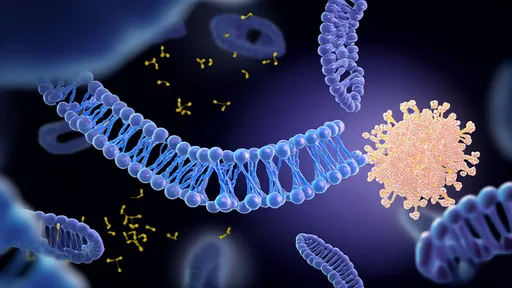
In a groundbreaking fusion of science and art, researchers and artists are collaborating to create stunning portraits using an unexpected medium: DNA. The technique, known as DNA "fingerprint painting," transforms the raw data of gel electrophoresis into visually striking images that resemble traditional portraits. This innovative approach not only showcases the beauty of molecular biology but also opens new avenues for public engagement with scientific concepts.
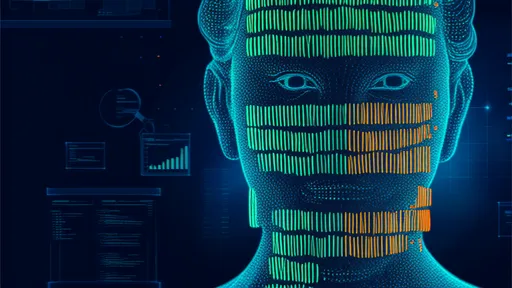
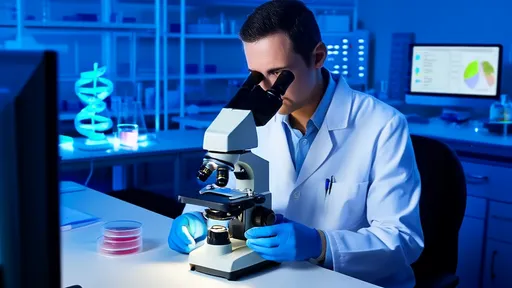
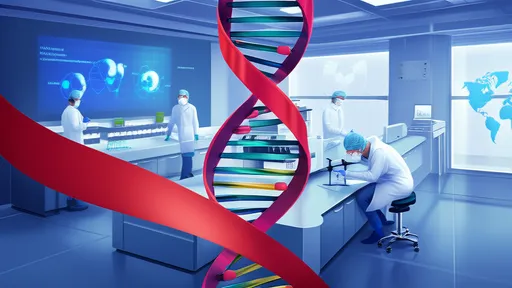
The process begins with the collection of DNA samples, typically from volunteers participating in the project. These samples undergo polymerase chain reaction (PCR) amplification to target specific genetic markers. When subjected to gel electrophoresis - a standard laboratory technique that separates DNA fragments by size - the resulting banding patterns create unique visual signatures for each individual. Artists then take these electrophoretic patterns and, through careful arrangement and digital manipulation, construct them into recognizable facial features.
What makes this technique particularly remarkable is how it preserves scientific accuracy while achieving artistic expression. Each portrait remains true to the actual DNA profile of its subject, with the spacing and intensity of bands corresponding to genuine genetic markers. The darker, more prominent bands might form the contours of a jawline or the curve of an eyebrow, while fainter bands create subtle shading and texture. This marriage of precision and creativity challenges conventional boundaries between scientific representation and artistic interpretation.
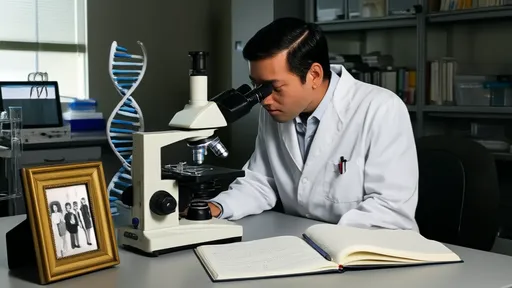
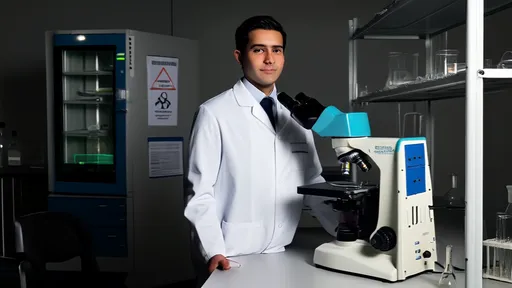
The concept originated when molecular biologist Dr. Elena Torres noticed the aesthetic potential in her daily lab work. "I'd been staring at gel electrophoresis results for years," she explains, "and one day I saw a face in the patterns. The bands seemed to align in ways that suggested facial features." Partnering with digital artist Marcus Chen, she developed algorithms to translate genetic data into portrait templates while maintaining the integrity of the original scientific information.
Public response to DNA fingerprint portraits has been overwhelmingly positive, with exhibitions drawing crowds who marvel at seeing their genetic code transformed into art. Many participants report a profound emotional connection to their DNA portraits, describing the experience as "seeing yourself at the most fundamental level." The project has sparked discussions about genetic identity, privacy concerns, and the evolving relationship between science and society.
Beyond its artistic merits, the technique serves an educational purpose. Viewers who might never set foot in a biology lab gain tangible understanding of concepts like genetic variation and DNA fingerprinting. The portraits make abstract scientific principles concrete and personal. "When people see their own face emerging from their DNA bands," notes Dr. Torres, "they suddenly grasp what genetic markers mean in a way no textbook could explain."
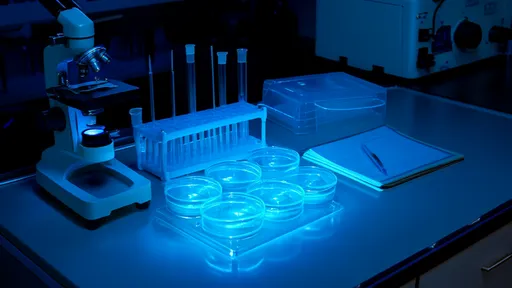
The technical challenges of the process are considerable. Creating a recognizable portrait requires selecting genetic markers that produce banding patterns of suitable density and variation. Too few markers yield insufficient detail, while too many create visual clutter. The research team has identified optimal combinations of short tandem repeat (STR) markers that balance scientific relevance with artistic potential. Lighting conditions during the electrophoresis process must be carefully controlled to produce consistent band intensities suitable for image processing.
Ethical considerations have been central to the project's development. Participants provide informed consent regarding how their genetic data will be used and displayed. The team employs strict anonymization protocols for research purposes, though many subjects choose to publicly associate their portraits with their identities. "We want people to feel ownership of their genetic artwork," says Chen, "while maintaining absolute transparency about what the data can and cannot reveal about them."
Future directions for the project include exploring animated DNA portraits that show how gene expression changes over time, and collaborative pieces that visualize genetic relationships between family members. The team is also developing educational kits that allow students to create simple DNA art while learning laboratory techniques. As the technology advances, possibilities emerge for more detailed portraits incorporating epigenetic markers or even representations of microbial DNA that comprises the human microbiome.
This intersection of science and art represents more than just a novel creative outlet. It challenges our perceptions of human identity and the very essence of portraiture. Where traditional portraits capture external appearances, DNA fingerprint paintings reveal the biological blueprint beneath. They invite us to consider how much of our identity is written in our genes, and how that genetic story can be told not just through data, but through beauty.
The project has garnered attention from both the scientific community and the art world, sparking collaborations with museums and research institutions. Critics praise the work for its innovative approach to science communication, while artists admire its authentic integration of biological processes into creative practice. As the team prepares for an international touring exhibition, their work stands as testament to the creative potential that exists at the boundaries between disciplines.
For the scientists and artists involved, DNA fingerprint painting represents more than the sum of its parts. "We're not just making pretty pictures with science," reflects Dr. Torres. "We're showing that the processes of discovery themselves contain aesthetic dimensions waiting to be revealed. The beauty was there in the gels all along - we're just helping people see it."
By /Aug 7, 2025
By /Aug 7, 2025
By /Aug 7, 2025
By /Aug 7, 2025
By /Aug 7, 2025
By /Aug 7, 2025
By /Aug 7, 2025
By /Aug 7, 2025
By /Aug 7, 2025
By /Aug 7, 2025
By /Aug 7, 2025
By /Aug 7, 2025
By /Aug 7, 2025
By /Aug 7, 2025
By /Aug 7, 2025
By /Aug 7, 2025
By /Aug 7, 2025
By /Aug 7, 2025
By /Aug 7, 2025
By /Aug 7, 2025
