In the dense rainforests of Central Africa, where poachers move like shadows and endangered species vanish without a trace, scientists have developed an unlikely crime-fighting tool: river water. By analyzing environmental DNA (eDNA) shed by animals and humans in waterways, researchers are now tracking poaching activities with unprecedented precision—turning rivers into silent witnesses against illegal wildlife trade.
The groundbreaking technique, pioneered by conservation geneticists at the University of Florida, exploits the fact that every living creature constantly sheds genetic material through skin cells, hair, feces, and bodily fluids. These biological traces flow into waterways, creating a real-time genetic inventory of everything that has recently passed through the ecosystem. What began as a method for monitoring fish populations has evolved into a forensic tool capable of identifying both poached animals and their hunters.
Rivers Don't Lie
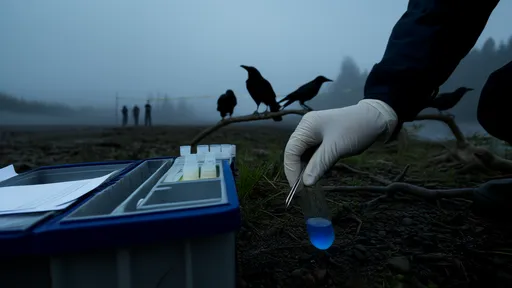
During a 2022 study in Gabon's Ivindo National Park, scientists collected water samples from rivers frequented by elephant poachers. The eDNA analysis revealed not just the presence of forest elephants (Loxodonta cyclotis), but also human DNA matching known poaching hotspots. "The water remembered what happened," explains Dr. Samantha Waters, lead researcher. "We found elephant DNA alongside human genetic markers in areas where no legal hunting permits existed—the river was quite literally telling us where crimes occurred."
This aquatic detective work goes beyond simple presence-absence data. The degradation state of DNA fragments allows scientists to estimate when animals were killed. Fresh, intact DNA suggests live animals passing through, while fragmented genetic material may indicate carcasses being transported. In one case, researchers detected DNA from a dismembered pangolin floating downstream before rangers found any physical evidence of the crime.
The Invisible Witness
Traditional anti-poaching methods rely on camera traps, foot patrols, and informant networks—all limited by manpower and visibility. eDNA monitoring works continuously, requires no cameras or physical contact, and covers vast areas through natural water flow. A single sampling expedition can survey hundreds of square kilometers as rivers integrate DNA from their entire watershed.
Perhaps most crucially, the technique captures evidence from species notoriously difficult to monitor. Forest elephants, unlike their savanna cousins, vanish into the jungle after being shot. Pangolins, the world's most trafficked mammal, move silently and nocturnally. Yet both leave genetic breadcrumbs in waterways that betray their presence—and their demise.
From Ivory to Aquariums
The applications extend beyond terrestrial poaching. In Brazil's Rio Negro, eDNA exposed illegal trade in endangered cardinal tetra fish popular in home aquariums. Researchers detected genetic signatures from massive harvesting operations disguised as small-scale subsistence fishing. Similarly, Cambodian waterways revealed DNA from critically endangered Mekong giant catfish being illegally caught during their protected spawning season.
Law enforcement agencies are taking notice. The technique has already provided supporting evidence in three successful prosecutions of wildlife traffickers in Malaysia and South Africa. Unlike traditional forensic methods that require confiscated animal parts, eDNA evidence can be gathered discreetly from public waterways without alerting suspects.
The Genetic Paper Trail
New advancements allow even finer resolution. Scientists can now distinguish between DNA from live animals versus processed products like ivory or smoked bushmeat based on cellular markers. Some teams are experimenting with DNA "fingerprinting" entire watersheds—creating genetic maps so precise they can trace contraband to specific tributaries where it entered the water system.
Ethical questions remain about human DNA collection, though current protocols focus only on confirming human presence rather than identifying individuals. Researchers emphasize they're developing the technology to document crimes, not to genetically surveil local communities. "We're reading the river's memory of events," stresses Dr. Waters, "not playing Big Brother."
As the method spreads from research labs to conservation frontlines, its proponents envision a global network of "smart watersheds"—rivers that automatically screen for biodiversity threats. In a world where wildlife crime generates $23 billion annually, this silent aquatic witness may prove to be conservation's most powerful new ally.
By /Aug 7, 2025

By /Aug 7, 2025
By /Aug 7, 2025

By /Aug 7, 2025
By /Aug 7, 2025
By /Aug 7, 2025
By /Aug 7, 2025

By /Aug 7, 2025
By /Aug 7, 2025
By /Aug 7, 2025
By /Aug 7, 2025
By /Aug 7, 2025

By /Aug 7, 2025
By /Aug 7, 2025

By /Aug 7, 2025
By /Aug 7, 2025

By /Aug 7, 2025

By /Aug 7, 2025

By /Aug 7, 2025

By /Aug 7, 2025
