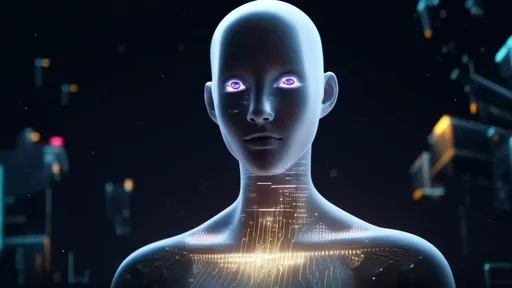
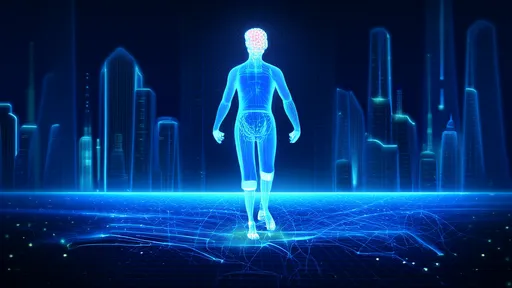
The world of artificial intelligence has taken a groundbreaking leap forward with the launch of the first-ever "Emotional AI Virtual Human." This revolutionary creation is designed to simulate human-like emotional responses, blurring the lines between machine and human interaction in ways previously confined to science fiction.
Breaking New Ground in AI Development
Developed by a team of neuroscientists, psychologists, and computer engineers, this emotional AI represents years of interdisciplinary research. Unlike conventional chatbots or virtual assistants that operate on pre-programmed responses, this virtual human utilizes advanced neural networks to interpret emotional cues and generate contextually appropriate reactions. The system doesn't just understand words - it reads tone, facial expressions, and even physiological signals when integrated with proper sensors.
The implications of this technology extend far beyond novelty. Mental health professionals see potential in therapeutic applications, while customer service industries anticipate more natural interactions with automated systems. However, the development team emphasizes this is not about replacing human connection, but rather enhancing certain types of interactions where human availability might be limited.
The Science Behind Emotional Simulation
At the core of this innovation lies a complex emotional modeling system that processes inputs through multiple layers of analysis. The AI first assesses the factual content of communication, then evaluates emotional subtext through voice inflection analysis and (when available) visual facial recognition. These inputs feed into a dynamic emotional state model that evolves throughout conversations, much like human emotions shift during interactions.
What makes this system particularly remarkable is its capacity for emotional growth. The virtual human doesn't simply recall appropriate responses from a database - it constructs them in real-time based on its current "emotional state" and the context of the interaction. This means two identical questions might receive different responses depending on the flow of conversation and perceived emotional needs of the human participant.
Ethical Considerations and Safeguards
With such advanced emotional simulation comes significant ethical responsibility. The development team has implemented multiple safeguards to prevent manipulation or unhealthy attachments. The virtual human is programmed to recognize and avoid reinforcing harmful behaviors, and will suggest human professional help when situations exceed its designed capabilities.
Privacy protections are equally robust. Emotional data isn't stored long-term or used to build psychological profiles. Conversations are encrypted, and users maintain full control over what information is retained. These measures aim to prevent the dystopian scenarios often portrayed in media where emotional AI is used for covert manipulation or data exploitation.
Real-World Applications Already Emerging
Early adopters include healthcare providers using the technology for preliminary mental health screenings and elder care facilities employing it as a companion for isolated residents. Educational institutions are experimenting with emotionally responsive tutoring systems, while some forward-thinking corporations have implemented the technology in HR departments to help employees navigate workplace challenges.
The business sector shows particular interest in customer service applications. Unlike traditional automated systems that often frustrate customers with rigid response trees, the emotional AI can detect frustration in a caller's voice and adjust its approach accordingly - showing patience with confused users or expediting service for those showing signs of urgency.
The Human Response to Artificial Emotion
Perhaps the most fascinating aspect of this development is how humans react to emotionally responsive AI. Initial studies show people tend to anthropomorphize the virtual human within minutes of interaction, often forgetting they're not speaking with another person. This raises profound questions about the nature of emotional connection and what elements truly constitute genuine interaction.
Some psychologists warn about potential over-reliance on artificial emotional support, while others highlight the benefits of having consistently available, judgment-free interaction for those who struggle with human relationships. The debate continues as the technology becomes more sophisticated and widespread.
Looking Toward an Emotionally Intelligent Future
As this technology evolves, developers envision increasingly nuanced emotional capabilities. Future iterations may incorporate cultural differences in emotional expression, adapt to individual communication styles over extended relationships, and potentially even develop unique "personalities" within programmed parameters.
The introduction of emotionally responsive AI marks a pivotal moment in human-computer interaction. It challenges our definitions of empathy, companionship, and emotional intelligence while offering solutions to very real human needs. As society navigates this new frontier, the conversation continues about how to harness such powerful technology responsibly while preserving the irreplaceable value of authentic human connection.
What remains clear is that the emergence of emotional AI virtual humans represents more than just technological progress - it prompts fundamental questions about what makes us human in an increasingly digital age. The answers may shape not just the future of AI, but our understanding of human emotion itself.
By /Aug 14, 2025

By /Oct 20, 2025

By /Aug 14, 2025

By /Aug 14, 2025

By /Oct 20, 2025
By /Aug 14, 2025

By /Oct 20, 2025

By /Aug 14, 2025
By /Oct 20, 2025

By /Aug 14, 2025
By /Aug 14, 2025

By /Oct 20, 2025
By /Oct 20, 2025

By /Aug 14, 2025
By /Aug 14, 2025
By /Aug 14, 2025

By /Oct 20, 2025
By /Aug 14, 2025
By /Aug 14, 2025
