The Federal Communications Commission (FCC) has taken a monumental step toward the future of wireless communication by approving the use of terahertz (THz) frequencies for 6G technology. This landmark decision signals that the countdown to 6G commercialization has officially begun. With the global race for next-generation connectivity heating up, the FCC’s move positions the United States as a frontrunner in the development and deployment of ultra-high-speed, low-latency networks that promise to revolutionize industries, economies, and everyday life.
The Terahertz Frontier: Unlocking 6G’s Potential
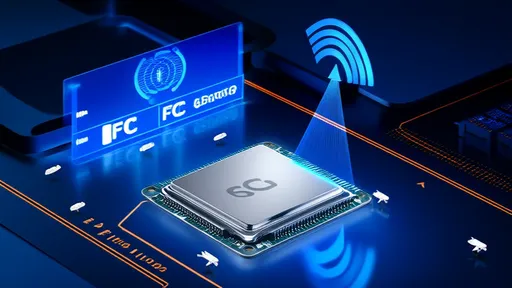
Terahertz waves, occupying the spectrum between 95 GHz and 3 THz, represent the next frontier in wireless technology. These frequencies offer unprecedented bandwidth, enabling data transmission speeds up to 100 times faster than 5G. While 5G primarily operates in the sub-6 GHz and millimeter-wave (mmWave) bands, 6G’s leap into the terahertz range will support applications that demand near-instantaneous data transfer, such as holographic communications, advanced artificial intelligence (AI) systems, and seamless integration of the Internet of Things (IoT) on an unprecedented scale.
The FCC’s approval is not just a technical milestone; it’s a strategic move to ensure U.S. leadership in the global 6G arena. By opening up these high-frequency bands, the commission has laid the groundwork for researchers, telecom companies, and tech giants to accelerate innovation. However, harnessing terahertz waves comes with significant challenges, including limited range and susceptibility to interference from atmospheric conditions. Overcoming these hurdles will require breakthroughs in antenna design, signal processing, and network infrastructure.
From Labs to Real-World Deployment
While the FCC’s decision is a critical enabler, the path to 6G commercialization is still fraught with technical and regulatory complexities. Telecom giants like Verizon, AT&T, and T-Mobile, alongside tech leaders such as Qualcomm and Intel, are already investing heavily in terahertz research. Early experiments have demonstrated the feasibility of short-range, high-capacity links, but scaling these technologies for widespread use will take years of development.
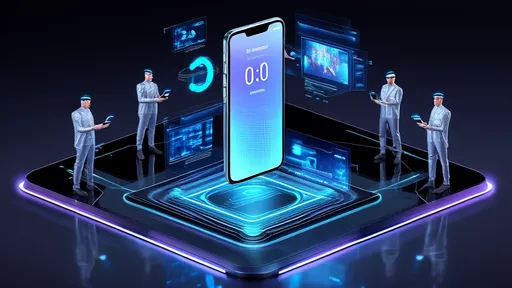
One of the most promising applications of 6G lies in its ability to support real-time digital twins—virtual replicas of physical systems that update instantaneously. Imagine smart cities where traffic flows, energy grids, and public services are optimized in real time, or factories where every machine and component is interconnected with zero lag. These scenarios, once the stuff of science fiction, are now within reach thanks to the terahertz spectrum’s capabilities.
Global Implications and the Race for Supremacy
The FCC’s approval also underscores the intensifying competition between the U.S. and China in the 6G space. While the U.S. is leveraging its strengths in research and private-sector innovation, China has been aggressively pursuing 6G through state-backed initiatives, aiming to dominate the standard-setting process. The European Union and Japan are also key players, with significant investments in terahertz research and international collaborations.
Whoever leads the 6G revolution will wield enormous influence over the future of global communications, setting the standards that shape everything from consumer electronics to national security. The FCC’s decision is a clear signal that the U.S. intends to be at the forefront, but the race is far from over. As the technology matures, policymakers will need to balance innovation with concerns over spectrum allocation, privacy, and cybersecurity.
What Comes Next?
With the regulatory green light in place, the focus now shifts to collaboration between academia, industry, and government. Pilot projects and testbeds will proliferate, offering glimpses of 6G’s transformative potential. Meanwhile, standards bodies like the International Telecommunication Union (ITU) and the 3rd Generation Partnership Project (3GPP) will play a pivotal role in ensuring global interoperability.
For consumers, the shift to 6G may seem distant, but the groundwork is being laid today. The FCC’s approval of terahertz frequencies marks a pivotal moment in the evolution of wireless technology—one that could redefine how we live, work, and connect in the not-so-distant future.

By /Aug 14, 2025

By /Oct 20, 2025

By /Aug 14, 2025

By /Aug 14, 2025

By /Oct 20, 2025

By /Aug 14, 2025

By /Oct 20, 2025

By /Aug 14, 2025

By /Oct 20, 2025

By /Aug 14, 2025

By /Aug 14, 2025

By /Oct 20, 2025

By /Oct 20, 2025

By /Aug 14, 2025
By /Aug 14, 2025

By /Aug 14, 2025

By /Oct 20, 2025

By /Aug 14, 2025
By /Aug 14, 2025
