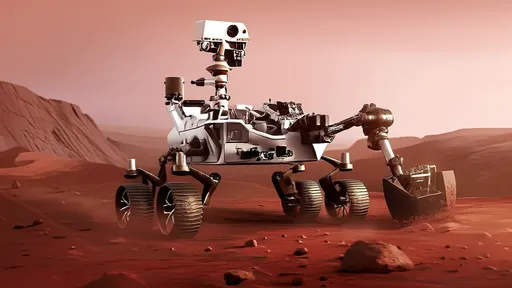
The red planet has long captured human imagination, but it took the sophisticated engineering of NASA's Perseverance rover to transform science fiction into tangible discovery. Selected among the 2025 Top Ten Global Engineering Achievements, this robotic geologist represents a quantum leap in interplanetary exploration, combining autonomous navigation, advanced sampling systems, and unprecedented scientific instrumentation in a single platform that continues to reshape our understanding of Mars.
Landing in Jezero Crater on February 18, 2021, Perseverance immediately demonstrated its engineering excellence through the most precise Martian touchdown in history. The rover's enhanced landing system, featuring Terrain-Relative Navigation, allowed it to autonomously avoid hazardous terrain during descent—a capability that previous missions lacked. This technological marvel didn't just land safely; it landed exactly where scientists wanted, within one kilometer of the optimal research site where an ancient river delta meets the crater floor. The significance of this precision cannot be overstated, as it placed the rover immediately within reach of scientifically rich terrain that would have taken previous rovers months or years to access.
What truly sets Perseverance apart is its sophisticated sample collection system, an intricate assembly of drills, coring bits, and sample tubes that represents humanity's first attempt at systematic Martian sample return. The rover doesn't simply collect rocks; it carefully documents each sample's context with high-resolution imaging and spectral analysis before sealing the pristine material in ultraclean containers. These samples, eventually destined for Earth through the ambitious Mars Sample Return campaign, could contain definitive evidence of past Martian life—a possibility that drives the meticulous engineering behind every aspect of the collection process.
The rover's scientific payload reads like a laboratory wish list for planetary scientists. PIXL (Planetary Instrument for X-ray Lithochemistry) can detect chemical composition at the scale of a grain of salt, while SHERLOC (Scanning Habitable Environments with Raman & Luminescence for Organics & Chemicals) uses ultraviolet lasers to identify organic compounds. These instruments work in concert with the rover's mast-mounted cameras and microphones, creating a multisensory experience of the Martian environment that previous missions could only hint at. The inclusion of microphones particularly represents an engineering innovation, allowing both scientific analysis of wind patterns and the emotional connection of hearing Martian winds for the first time.
Perhaps the most publicly visible engineering achievement has been the Ingenuity helicopter, which hitched a ride beneath Perseverance's belly. What began as a technology demonstration became a full-fledged aerial scout, completing dozens of flights far beyond its original five-flight mission plan. Ingenuity's success has proven that powered, controlled flight is possible in Mars' thin atmosphere, opening entirely new approaches to planetary exploration. The helicopter's navigation system, rotor design, and power management in extreme temperatures represent engineering solutions to problems that many thought insurmountable.
Perseverance's power system showcases another engineering triumph. The rover's Multi-Mission Radioisotope Thermoelectric Generator (MMRTG) converts heat from plutonium-238 decay into electricity, providing reliable power regardless of dust storms or Martian seasons. This nuclear power source enables scientific operations that would be impossible with solar power alone, including nighttime observations and operating power-intensive instruments during dust-heavy periods. The system is designed to provide energy for years, far beyond the rover's primary mission timeline.
The rover's autonomous driving capabilities represent a fundamental shift in how we explore other planets. While previous rovers required detailed daily driving instructions from Earth, Perseverance can navigate complex terrain independently using its computer vision systems. This autonomy allows the rover to cover more ground safely, making scientific discoveries at a pace that would have been unimaginable just a decade earlier. The engineering behind this system includes specialized processors that can process stereo imagery in real-time, identifying hazards and calculating safe paths without human intervention.
Communication systems aboard Perseverance have also set new standards for interplanetary data transfer. The rover can transmit data directly to Earth using its high-gain antenna, but more importantly, it leverages NASA's orbiters around Mars as data relays. This network approach allows Perseverance to send vast amounts of scientific data and high-resolution imagery back to Earth daily—including the stunning panoramic views that have captivated public imagination worldwide. The reliability of these communication systems ensures that precious scientific data reaches researchers consistently, maximizing the return on this monumental engineering investment.
Beyond its explicit scientific mission, Perseverance serves as a testbed for technologies that could support future human exploration. The MOXIE instrument (Mars Oxygen In-Situ Resource Utilization Experiment) has successfully demonstrated the production of oxygen from the Martian atmosphere's carbon dioxide—a crucial capability for future human missions that would need to manufacture breathable air and rocket propellant locally. This practical application of engineering directly addresses one of the most significant challenges of human Mars exploration.
The selection of Perseverance among the world's top engineering achievements recognizes not just the rover itself, but the collective human effort behind it. Thousands of engineers, scientists, and technicians across multiple countries contributed to making this mission possible, solving innumerable technical challenges along the way. From the intricate systems that keep the rover operational in extreme temperature swings to the software that enables daily scientific decision-making from millions of miles away, every component represents the pinnacle of current engineering capability.
As Perseverance continues its exploration of Jezero Crater, each new discovery validates the engineering choices that made this mission possible. The rover has already confirmed the presence of organic compounds, documented the geological history of an ancient lakebed, and collected samples that may eventually reveal whether life ever existed on Mars. These scientific returns, combined with the technological innovations demonstrated throughout the mission, cement Perseverance's place as one of the most significant engineering achievements of our time—a robotic ambassador that continues to expand human knowledge while paving the way for future explorers.
The legacy of Perseverance extends beyond its immediate scientific discoveries. The engineering solutions developed for this mission are already influencing the design of future planetary explorers, both robotic and human. The success of autonomous navigation informs plans for more ambitious rover missions, while technologies like MOXIE provide blueprints for life support systems that will one day sustain astronauts on the Martian surface. In this sense, Perseverance serves as both explorer and pathfinder, demonstrating what's possible when human ingenuity meets the challenges of interplanetary exploration.

By /Aug 14, 2025

By /Oct 20, 2025

By /Aug 14, 2025

By /Aug 14, 2025

By /Oct 20, 2025

By /Aug 14, 2025

By /Oct 20, 2025

By /Aug 14, 2025

By /Oct 20, 2025

By /Aug 14, 2025

By /Aug 14, 2025

By /Oct 20, 2025
By /Oct 20, 2025

By /Aug 14, 2025

By /Aug 14, 2025

By /Aug 14, 2025

By /Oct 20, 2025

By /Aug 14, 2025

By /Aug 14, 2025
